Dispatch

  • MPL vs CPL – What is the difference?

    So, you’re thinking about becoming an airline pilot. Great!

    But right away, you’ll be faced with a big question:
    Should you go the MPL route or the traditional CPL route?

    Both are legitimate paths to the flight deck, but they’re built quite differently. In this post, we’ll break down the key differences, similarities, and pros & cons of the Multi-Crew Pilot Licence (MPL) versus the Commercial Pilot Licence (CPL)—and explain where the Airline Transport Pilot Licence (ATPL) fits in at the end of the road.

    What Is a CPL?

    The Commercial Pilot Licence (CPL) is the more traditional route to becoming a professional pilot. Under this path, you typically:

    • Train on single-pilot aircraft
    • Log a minimum of 200 hours of total flight time (in Singapore).
    • Earn various ratings (instrument, multi-engine, etc.).

    This pathway offers flexibility—you’re trained to fly both solo and as part of a crew. It’s the standard licence issued to most pilot trainees outside of airline-sponsored cadet programmes.

    With this licence, you can fly PIC for non-airline commercial operations I.E. Flight Instructing, Charter flights etc.

    What Is an MPL?

    The MPL Route: Singapore Airlines & Scoot Cadetships

    Both Singapore Airlines and Scoot offer cadet programmes that lead to the Multi-Crew Pilot Licence (MPL).

    Here’s what that looks like:

    • You apply as a cadet directly with the airline. If successful, the airline sponsors your training
    • You complete about 85–90 hours of actual flying, gaining a PPL with Instrument Rating and more than 240 hours in simulators, tailored specifically to airline operations and SOPs.
    • You graduate with an MPL restricted to that airline—you can’t use it to fly commercially for another operator.

    Once you join the airline officially, you begin as a Second Officer on the specific fleet you’re trained on.

    Comparison between MPL vs CPL

    MPLCPL
    Flight Hours~90 actual flight hours + ~ 240+ sim hours200+ total flight hours
    Solo FlyingNo commercial solo privilegesCan fly solo commercially (non-airline)
    Training StyleAirline-specific, multi-crew from day 1Traditional, solo-first then multi-crew
    FlexibilityLocked to sponsoring airlineCan apply to multiple airlines
    Licence ValidityOnly valid with airline that sponsored it
    Valid across any commercial operator
    Time to AirlineShorter, ~18–22 monthsDepending on job market

    MPL

    Advantages

    • Faster route into the right seat of a jet.
    • Trains you for Multi Crew operations from the start
    • Less flying cost since many hours are in sim.

    Disadvantages

    • Tied to the airline that sponsors your training—if the airline withdraws its offer, your licence is practically useless elsewhere.
    • No commercial PIC privileges until you convert to a ATPL later
    • Less real-world flight experience than a CPL holder.

    CPL

    Advantages

    • Greater flexibility—you can apply to multiple airlines or fly in various sectors (charter, surveying, instruction).
    • More flying experience—often more varied and hands-on.

    Disadvantages

    • Longer time to airline job unless you’re selected by an airline post-training.
    • Higher overall cost if self-funded.
    • More personal responsibility for managing ratings and exams.

    What About ATPL?

    The Airline Transport Pilot Licence (ATPL) is the highest licence you can hold. It allows you to act as a Captain on multi-crew aircraft.

    In Singapore, CPL and MPL holders typically operate under an ATPL (frozen)—which means they’ve passed the 14 theoretical exams, but haven’t yet met the 1500 hours flying experience required to “unfreeze” it.


    Final Thoughts

    If you’re accepted into an MPL cadetship with a major airline, it’s a highly efficient and job-secure route—as long as the airline stays committed.

    If you’re funding your own training, or want more flexibility in your career path, the CPL route makes more sense, though it may take longer to land your first airline job.

    Each path has its trade-offs. What matters most is choosing the one that aligns with your goals, finances, and appetite for risk.


  • The Airline Pilot’s Journey: The Good, Bad & the Reality

    Have you ever seen a pilot walk through the terminal, wearing his uniform and cap, looking all so crisp and wonder to yourself : I wish I could be one?

    Many people see the glitz and glamour of being a pilot. They romanticize the image, the lifestyle, and the paycheck. But not many understand what it truly takes to get there and more importantly, to stay there. In this post, I’ll talk about the reality behind the uniform.

    The zero to airline pilot journey

    In Singapore, the typical path to becoming an airline pilot usually begins with a cadetship programme. As of May 2025, there are three commercial airlines based in Singapore: Singapore Airlines, Scoot, and Jetstar Asia. Currently, only Singapore Airlines and Scoot offer cadet programmes. Jetstar Asia has yet to reopen theirs after COVID.

    Competition for a place as a Cadet in Singapore Airlines or Scoot is fierce. Thousands apply each year, hundreds get through to the online assessment, interview and medical, and only a handful are selected.

    Academic & flying skills

    Successful cadets begin with ground school, where they study the 14 Airline Transport Pilot Licence (ATPL) subjects. These include Aerodynamics, Airframe & Systems, Meteorology, Air Law, and more. The syllabus is intense and time-pressured. Those who struggle to keep up are dropped from the course.

    Ground school looks something like this

    Next comes the flight training phase, usually conducted in Australia. Cadets learn not only general flying skills, but also Standard Operating Procedures (SOPs) specific to their airline. Every flight is graded, and performance matters. At the end of training, cadets are streamed and type-rated according to company needs. Once again, those who don’t meet standards are dropped and are required to repay the cost of their training.

    Once type-rated, cadets begin their journey as a commercial airline pilot. Depending on their assigned fleet, their lifestyle can vary significantly.

    Work-Life and Free Time

    Short-haul pilots fly more sectors each month, often flying turnaround routes (same-day returns). Long-haul pilots fly fewer flights, but for much longer durations. They see more of the world but are away from home more often.

    However, just because a pilot isn’t in the cockpit doesn’t mean they’re off-duty. A lot of “free time” is spent on studying, self-briefing, and staying current with SOPs and procedures. Pilots may also be called in on standby or rest days.

    Being a pilot as a family guy is tough

    Recurrency and Checks

    Training never really stops. Even after line training is complete, pilots must undergo regular checks:

    • Line Checks (annually)
    • Base Checks (every two years)
    • Simulator Checks, as required

    Failure in any of these can result in grounding or even termination. The pressure to perform is constant.

    External Factors

    Yes, the salary can be attractive. But aviation is not immune to external risks.

    A pilot’s livelihood hinges on medical fitness. A failed annual medical could mean being grounded indefinitely. Illnesses, even minor ones, are taken seriously in aviation. Mental and physical health are monitored continuously.

    For Non Cadets

    If you’re not in a cadet programme and wish to pursue your licence privately, the road is tougher.

    • Training costs can exceed SGD $200,000.
    • No job guarantee at the end of it.
    • Airlines rarely hire fresh Commercial Pilot Licence (CPL) holders with only 200 hours.
    • Outside Singapore, most airlines require a frozen ATPL and 1500 hours just to be considered.

    This path demands not just money and skill, but also grit, networking, and a fair bit of luck.

    Final Thoughts

    So the next time you see a pilot walking through the airport in a crisp uniform, don’t just see the prestige—see the journey.

    See the sacrifices made, the family time missed, the long hours of study, the pressure of every flight, and the constant checks that never stop. Behind the uniform is someone who’s earned their stripes, through discipline, resilience, and relentless effort.

    Being a pilot isn’t just a job. It’s a commitment to safety and excellence And for those who choose it, it’s not about glamour. It’s about passion.

  • Editor’s backstory: Part 3

    New Beginnings

    Success is not final, failure is not fatal

    A week after completing my national service, I found myself on a plane to Australia. This time to Melbourne.

    I decided to continue pursuing flying professionally, fortunately with the blessings and financial support of my parents. This marked a new chapter of my life, one that will be the most formative in my pilot career.

    I was deep in thought during the car ride to the flight school, watching the urban cityscape slowly give way to rolling hills and fields filled with cows and sheep. New beginnings are always a little hard.

    I eventually settled in, thanks to a few fellow Singaporean friends I met there. Then came ground school (again), and not long after, I was flying once more, this time in the Cessna 172 Skyhawk.

    The airport I operated out of was a Class G airport. For those unfamiliar, this basically means there’s no Air Traffic Control (ATC). Aircraft separation and sequencing were up to the pilot’s discretion, and communication with fellow pilots was key. Initially, I messed up a few radio calls and callsigns, but after a while, I got used to the rhythm. The workload soon became manageable, and before long, it was time for my first solo.

    First Solo

    After satisfactorily completing a few circuits, my instructor and I landed the plane. We taxied to the main intersection of the airport, where he wished me good luck and got out. I taxied back to the runway and took off.

    It was all muscle memory until final approach. That’s when it hit me. I was alone in the cockpit. Truly alone. Whatever happened from this point onward was entirely on me.

    Keeping my scan going—runway visuals, Precision Approach Path Indicator (PAPI) lights, instruments—I flew a stable approach, cut the throttle, flared at the right moment, and landed.

    My first solo

    I was stoked that I came back in one piece—that I had flown and landed a plane on my own. Myself. But more than anything, it was validation. Validation that I could fly to standard. Validation that my past failures didn’t define me.

    And it was beautiful.

    The next few flights focused on crosswind landing techniques and more practice on the various circuit procedures, such as short field landings and glide approaches. Not long after came my first flight test.

    For context, I was working towards the Australian Recreational Pilot Licence (RPL). The test profile included standard maneuvers such as straight and level flight, climbs and descents, turns, steep turns, and stalls in various configurations. It also involved Practice Forced Landings and Precautionary Search Procedures, followed by circuit work back at the airport.

    Flight test

    The day came. I woke up earlier than usual and “chair-flew” the entire flight profile. When I felt ready, I headed airside and pre-flighted the aircraft. I checked the NOTAMs, TAFs, and METARs, then delivered my briefing to the examiner.

    The ground portion came first. Questions on the privileges and limitations of the licence, airspace classifications, emergency procedures, and general aeronautical knowledge.

    With that done, we went flying.

    I performed the required maneuvers within tolerances, then returned for circuit work. Everything went smoothly. When it was time for the final landing, I made sure to maintain a disciplined scan, making sure never to repeat the mistake I once made. We touched down uneventfully.

    I say “uneventfully” only because I had become so used to receiving constant in-flight feedback during my time in SYFC and the RSAF. This flight was quiet and I was not used to that.

    After the post-flight debrief, the examiner told me I had done well. I had passed the flight test. I was officially licensed!

    Reflection

    Looking back, this journey wasn’t just about learning how to fly. It was about growth and persistence. From the nervous first radio calls to landing solo, every challenge shaped me into the pilot I am today. This milestone reaffirmed my passion and proved to myself that I was capable of overcoming setbacks. Success is not final, failure is not fatal.

    Pages: 1 2

  • Editor’s backstory: Part 2

    “Above all”

    After SYFC, I completed my education in Polytechnic & as a Singaporean male, I was called up for National Service. I applied for and got in the pilot trainee program, and so began my time in the RSAF.

    I reported to the Air Force Training Command (AFTC), where I met seniors and fellow course-mates. Seeing familiar faces from my SYFC days was comforting. We all shared a common goal, and that made the experience feel a little less daunting. After about two weeks, we were sent to Australia for Air Grading.

    It was still during the Covid-19 pandemic, so quarantine was mandatory for international travel. I did a week of self-isolation at home, followed by two weeks of hotel quarantine in Perth, Western Australia. Great for a homebody, absolute torture for someone who wasn’t.Thankfully, Discord and WhatsApp kept us sane, allowing us to stay in touch with family, friends, and course-mates. We used that time to study procedures, flows, the training area, and any other materials we could get our hands on.

    My room during the 2 weeks Quarantine – note the joystick and the cockpit picture pasted on the window!

    After two weeks of what felt like a strange vacation, we officially reported for the Air Grading Course (AGC). The first thing that caught my eye was the corridor walls, lined with photos of past courses—just like a scene from Top Gun. It filled me with both excitement and a deep sense of reflection. So many had walked these halls before me, and many more would follow. To be part of that legacy meant a great deal.

    The Air Grading Program

    AGC is divided into two phases. The first phase consists of ground school and sorties 1–6, followed by a stage check. The second phase covers sorties 8–12, culminating in a final flight test. Both the stage check and final test are pass-or-fail—fail, and you’re out.

    Our first week was spent in ground school. We had intensive lectures and lesson briefs conducted by current and ex-RSAF pilots. Topics included Straight and Level, Turning, Stalling, Airmanship, and more. Outside the classroom, we were busy memorizing checklists, procedures, and cockpit flows.

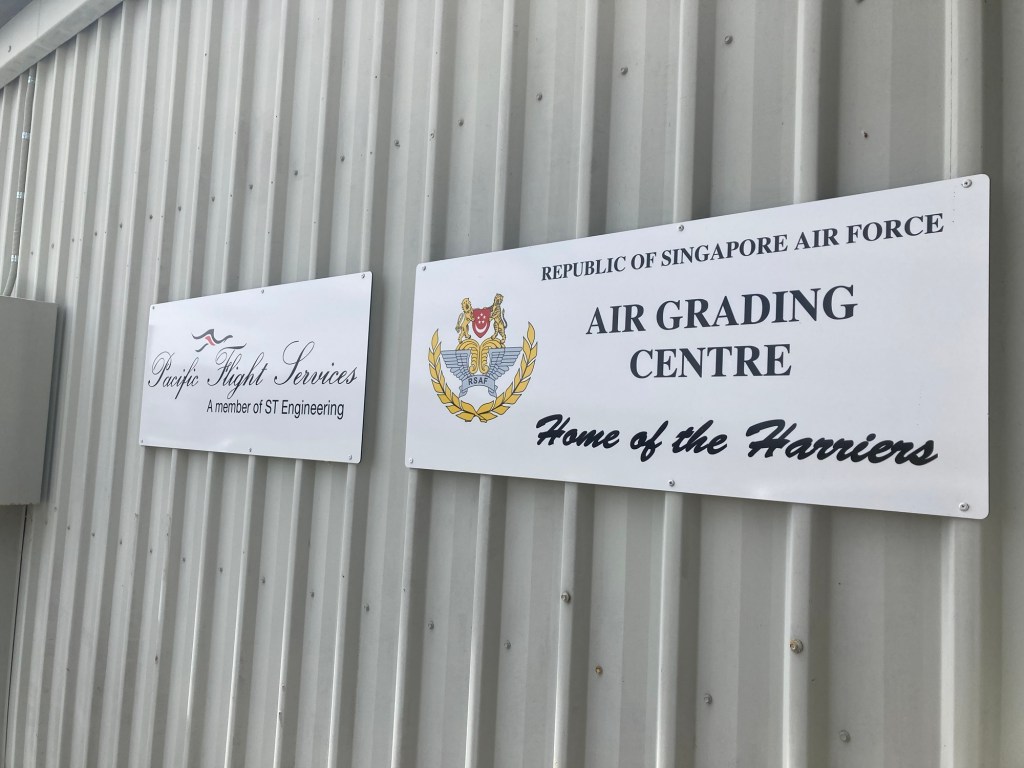
    Outside Air Grading Center

    First flight

    Soon, we were ready for our first flight. I grabbed my helmet bag and seat cushion, met my instructor, and headed airside. We squeezed into the cockpit of the CT4B, completed our flows, started up, checked the ATIS, and communicated with ATC. Before I knew it, I was airborne. That first flight was mostly an orientation, where the instructor showed me the boundaries of the training area and demonstrated basic maneuvers sprinkled with a few aerobatics.

    Rising Standards

    After that first flight, we were assessed more strictly. As we gained hours, we were expected to perform more maneuvers. Existing ones were graded with tighter tolerances, and the standards rose steadily.

    By the fifth flight, the failures began. First one, then another, and another. By the seventh or eighth flight, only a handful of us remained from the original 20+ trainees. More than half the course had not made it through phase one. The reasoning was simple, though harsh: the RSAF invests over a million dollars in training each pilot. Resources go to those who prove they can handle the pressure.

    Stage Check

    Soon it was my turn for the stage check. It covered everything. Taxiing, radio calls, take-off, departure, climbs and descents, turns, steep turns, stalls, and simulated circuits, ending with arrival and landing.

    After landing, my instructor said nothing. I walked back to the debriefing room in silence. The suspense was brutal. Had I messed something up? I did my best, was that enough?

    Eventually, my instructor came in and asked, “How do you think you performed?”

    “Mostly up to standard, Sir, though there are definitely areas I can improve.”

    He nodded, agreed with my assessment, and pointed out my weak spots. Then I asked: “Did I pass, Sir?”

    “For now,” he replied.

    Relief washed over me—but I also knew I wasn’t far from failing. I had to improve fast.

    The next few flights were about Circuits. Proper spacing from the runway when downwind, maintaining altitude and direction according to tolerances, when exactly to turn in each leg of the circuit etc. Approaches and landings were also refined. Then came Aerobatics where wing-overs, loops and barrel Rolls were taught. It was fun seeing the world upside down. And finally came the final flight test.

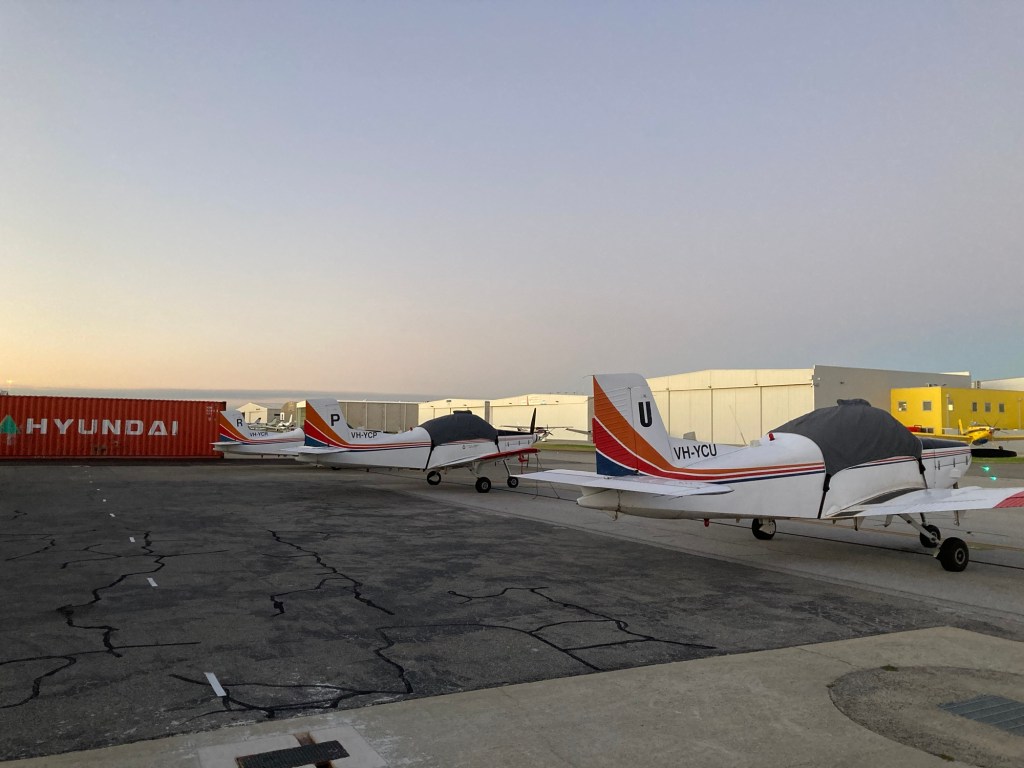
    Sunsets at Jandakot

    Final test

    Anticipation filled my mind. “I’m so close to passing. Lets do this.” By this stage everyone else in my course had either passed or failed. I was the last one standing.

    The flight started off well. Took off, departed for the training area, did turns, stalls, steep turns, wing-overs, loops, before heading back to do circuit.

    Up to this point I was fairly confident. I’ve done circuits before, this should not be an issue. I just had to get 2 out of 3 circuits right. First circuit went well. Second circuit I conducted a go around as I was high on final approach. Now it all came down to the last circuit. Determined not to repeat my mistake, I locked in on flying the perfect approach. But I over focused—I tunnel visioned. My speed dropped below the minimum speed for approach, a critical error. My instructor had to take over.

    I did not make the cut. I was devastated—but I understood. In aviation, there’s no room for mistakes like that.

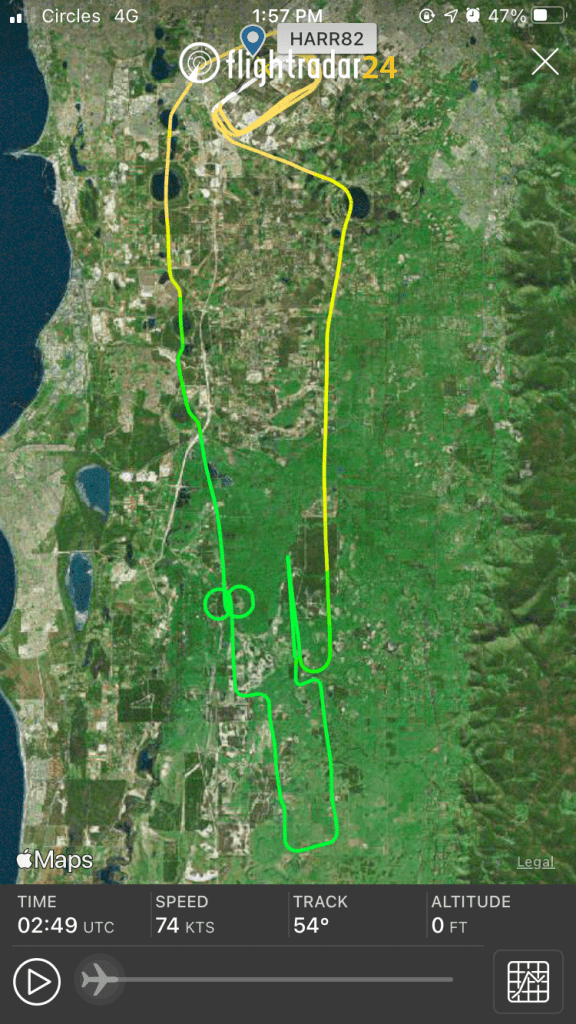
    My last AGC flight on FR24

    The Lesson I Carry

    That experience taught me a lesson I carry with me every day: Don’t tunnel vision. Keep the bigger picture in mind. As heartbreaking as it was, that flight remains one of the most important learning moments of my aviation journey.

    Closing Thoughts

    Looking back, my time in the AGC was one of the most intense and formative chapters of my aviation journey. Though I didn’t make it all the way through, the experience gave me a deep respect for the discipline, precision, and resilience required of a military pilot.

    More importantly, it taught me how to confront failure—not as the end of the road, but as part of the process.

    That lesson has stayed with me, not just in the cockpit, but in every aspect of life. Every setback since has been met with the same mindset: reflect, learn, and grow. Today, I still carry that standard of excellence and self-awareness that the RSAF instilled in me. And for that, I’m incredibly grateful.

  • Editor’s backstory: Part 1

    I remember my first real taste of aviation—it was at the Singapore Airshow. Dad brought the whole family out, a rare family outing under the open sky.

    We hid in the shadow of a parked C-130, trying to escape Singapore’s blazing sun, eyes skyward as jets danced above us. Some planes were easy to spot, gracefully flying in formation. Others caught us off guard. We’d hear the sharp whiz of something slicing through the air, followed by a roar that hit us a second too late, rumbling through our chests like thunder. I didn’t know it then, but they were performing aerobatics—a carefully choreographed sequence of rolls, loops, and dives designed to push both man and machine to the limits.

    That was the moment something clicked. The speed, the noise, the precision—it wasn’t just a show. It was art, power, and discipline all at once. And that spark stayed with me long after the skies fell silent.

    Fast forward to when I was 17. I signed up with Singapore Youth Flying Club (SYFC). In typical teenage angst, I wasn’t very keen on losing my weekends to go to school again, but once I had taken that first actual flight, it was all worth it.

    On my first ever flight, I learned how to steer the plane along the yellow lines on the ground—a process called taxiing—how to call Tower for clearances, and most thrilling of all, how to push the throttle forward and lift off the runway for the very first time. I remember thinking to myself, “I’m Tom Cruise in Top Gun”

    The next few flights were a blur of maneuvers, procedures but one thing I remembered was how it made me feel. Liberating. There is no better experience than being in control of a metal bird in the skies.

    Setbacks though, are common in life and my SYFC journey came to an end 9 flight hours after it started. I had not performed up to standard and my instructor had no choice but to “chop” me. But it left me wanting more.

    Continued in Part 2

  • The Launch of Cleared to Flight Levels

    There’s something about the roar of a jet engine, the quiet hum at cruise, and the art of turning a machine into flight — that’s always captivated me. Whether you’re an aspiring pilot, a frequent flyer, or just someone who looks up every time an aircraft passes overhead, you’ve just landed in the right place.

    Who Am I:
    I’m Aloysius, a commercial pilot based in Singapore. My journey to the flight deck hasn’t been a straight line — it’s been filled with flight school struggles, airline assessments, self-doubt, and plenty of hours in the air and on the ground. But through it all, the passion never left.

    Why I Started This Blog:
    There’s a lot of information out there about aviation, but most of it are scattered around the web. I created Cleared to Flight Levels to change that. This blog will share:

    • Insight into aviation careers and pathways
    • Practical tips for student pilots and cadets
    • Real stories from flight training and airline life
    • Aviation news and opinion — from a pilot’s perspective

    What You Can Expect:
    In the coming weeks, I’ll be breaking down the different ways to become a pilot in Singapore, how to survive cadet interviews, what they don’t tell you about multi-crew flying, and more. Expect honesty, clarity, and maybe the occasional bit of turbulence.

    Let’s Fly:
    Whether you’re chasing your wings or just love the view from 36,000 feet — welcome aboard.